
Roman gains enough fuel margin for up to 22 years of science
A lower-than-budgeted mass and a highly accurate course correction expanded the telescope’s projected operating life; 22 years is a fuel-supported possibility, not a guarantee.
Leitura autorizada · 3 crédito(s) restante(s)
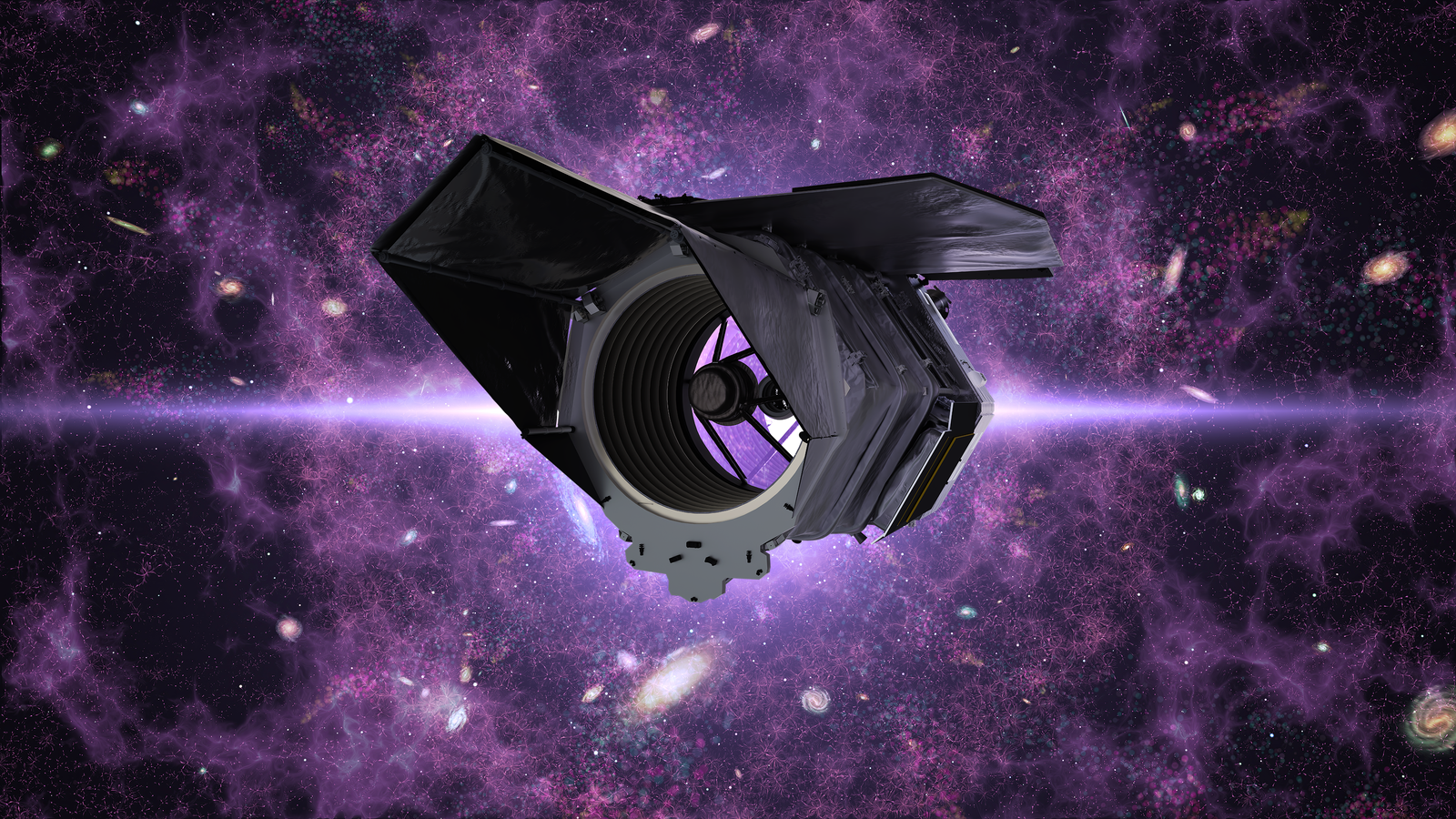
The Nancy Grace Roman Space Telescope is still traveling to its observing post, yet it has already gained an unexpected operating margin. The U.S. National Aeronautics and Space Administration (NASA) now estimates that the available propellant could support at least 22 years of science operations. Before the August 30 launch, the design called for a five-year primary mission, a possible five-year extension, and a ten-year fuel budget in total. The new figure is a capacity projection: it depends on the observatory remaining healthy and on the remaining maneuvers proceeding as expected.
Part of the difference was created before the rocket left Earth. Engineers budgeted propellant for a maximum spacecraft mass of 9,800 kilograms, but Roman’s final mass was 8,056 kilograms. Because the lighter spacecraft requires less thrust and left room in the mass budget, its tanks could be filled to capacity. NASA estimates that this surplus adds roughly four years beyond the ten originally planned.
The most measurable gain came from the first trajectory correction on August 31. The maneuver hit its target with better than 99% accuracy and consumed about 18 kilograms of propellant, less than 10% of the 200 kilograms allocated to it. That saving represents another four projected years. Because the first adjustment left Roman very close to the desired path, a second correction planned for late September should be small; NASA attributes four additional potential years to the expected savings from that step and orbital insertion.
Roman is heading for an orbit around the second Lagrange point, known as L2, about 1.6 million kilometers from Earth. In that region, the gravity of the Sun and Earth lets the observatory follow our planet with relative stability. After arrival, expected in early December, small burns roughly every 28 days should maintain its position. That is why propellant — the mission’s main consumable resource — can translate into observing time.
Roman was built to survey large areas of sky at Hubble-like resolution with a field of view at least one hundred times wider. Its surveys are intended to study how cosmic expansion and large-scale structure relate to dark energy and dark matter, while also searching for exoplanets, worlds orbiting other stars. A longer mission does not change the instruments’ capabilities, but it increases the number of observing cycles and the opportunity to follow phenomena that evolve over years.
This is a material development after the launch reported earlier: it rests on Roman’s measured final mass and the first maneuver’s actual fuel use. Even so, fuel for 22 years is not a promise of 22 years of data. Electronics, detectors, communications, funding, and operational decisions also constrain a mission. The concrete result is narrower and valuable: Roman began its journey with a reserve that could turn a decade-long mission into a two-decade observatory if the rest of the system proves equally durable.
Key points
- Roman was designed around a ten-year fuel budget, but NASA now projects at least 22 potential years of operations.
- The first course correction used about 18 kg of the 200 kg allocation and achieved better than 99% accuracy.
- The projection expands the science opportunity but does not guarantee that instruments, funding, and other systems will last 22 years.
Comments
No comments have been published yet.
Sign in with a subscription to comment.