
Map of 166,700 neurons shows where male and female fly brains diverge
The first complete connectome of a male central nervous system links brain and nerve cord; few cells differ between sexes, but their connections reach a larger share of the network.
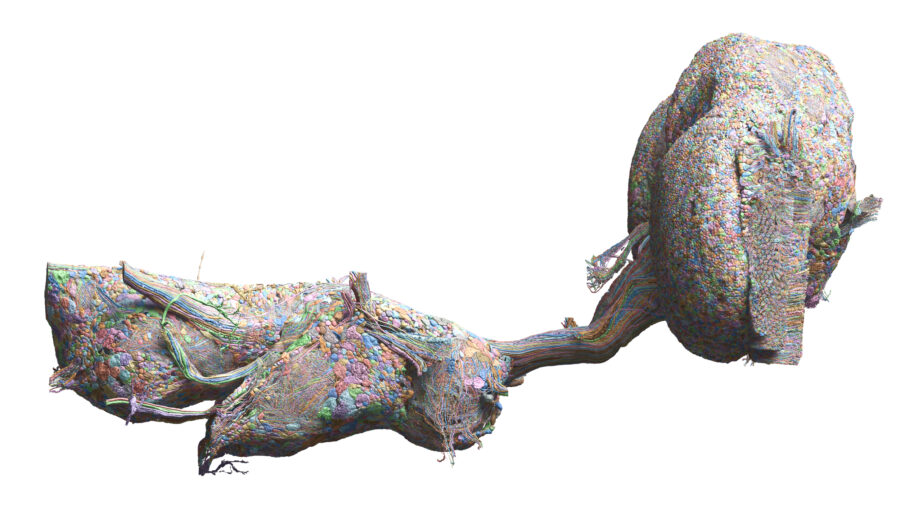
How do genetic differences between sexes become circuits capable of guiding different behaviors? To address that question across an entire nervous system, an international consortium reconstructed the brain and ventral nerve cord of a male fruit fly. The result is a connectome: a map identifying neurons and the synapses through which they connect. For the first time, such a map covers the brain, optic lobes and the structure functionally analogous to a vertebrate spinal cord in the same adult male animal.
Researchers cut the central nervous system of one male Drosophila melanogaster into extremely thin sections and imaged each surface with electron microscopy. Artificial-intelligence algorithms aligned millions of images and reconstructed cellular shapes in three dimensions; experts then corrected and annotated the result. Published in Cell, the work contains 166,700 neurons, 124 million synaptic connections and 11,710 cell types identifiable across animals. The authors estimate that human proofreading added up to the equivalent of 44 years of labor.
The team compared the male reconstruction with existing female maps. Nearly 95% of brain neurons appear as cell types shared by both sexes. Just under 5% of male cells were male-specific or sexually dimorphic—present in both sexes but different in shape or connectivity—compared with fewer than 3% in the female brain. These cells were not randomly distributed: they clustered in higher-order regions associated with decision-making and behavioral control.
That small cellular fraction had a wider effect on wiring. About 12% of neurons in the male brain showed sex-associated connectivity differences, versus the reported 4% in the female brain. Many dimorphic neurons expressed fruitless and doublesex, genes involved in sex determination in flies. The map shows that these cells form densely connected hubs able to reroute sensory signals into different circuits; by itself, it does not demonstrate which behavior any connection causes.
Including brain and nerve cord in one continuous reconstruction changes the questions researchers can ask. Instead of examining an isolated segment, they can trace complete paths from visual, olfactory or taste inputs to motor neurons controlling legs, wings and other structures. The dataset is publicly available under a CC BY license for queries, comparisons and hypothesis testing by other groups.
The male connectome is a detailed blueprint, not a recording of the system in action. It supplies candidate locations and connections for experiments on courtship, aggression, feeding and movement. Establishing how these circuits produce behavioral differences will require recording activity and perturbing specific neurons in living animals, as well as repeating comparisons across individuals. The advance is that it makes this experimental chain possible at system scale.
Key points
- The connectome contains 166,700 neurons and 124 million synapses spanning a male fly's brain and ventral nerve cord.
- Just under 5% of male cells were sex-specific or dimorphic, while 12% of neurons showed sex-associated connectivity differences.
- The map enables full-circuit tracing, but neural activity and behavioral causality still require experiments in living animals.
Comments
No comments have been published yet.
Sign in with a subscription to comment.