
A 2024 lunar crater has a cold zone about six kilometers wide
Before-and-after images date the impact; orbital measurements reveal cooler terrain at night, although no one observed the collision as it happened.
Leitura autorizada · 3 crédito(s) restante(s)
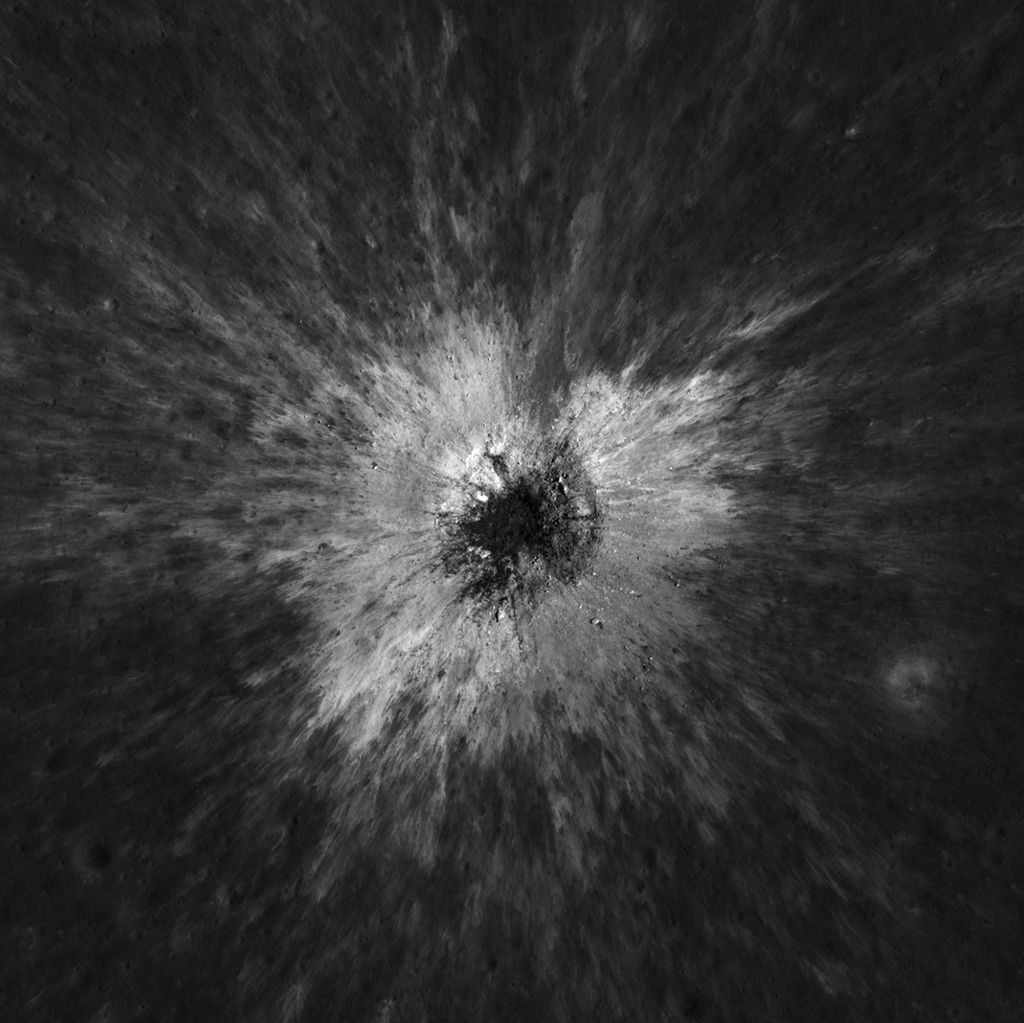
McGetchin crater is 222 meters across, but its thermal signature extends for kilometers. Images from NASA’s lunar orbiter show it formed between April 11 and May 22, 2024. Later measurements found an area about 6.4 kilometers wide that is roughly 9 °C cooler at night than nearby terrain. The impact was not seen as it happened: its date comes from comparing images taken before and after.
Robert Wagner noticed the change in October 2025 while overlaying maps from the wide-angle camera aboard the Lunar Reconnaissance Orbiter (LRO), which has monitored the Moon since 2009. Aligning old and new images highlighted changes; sharper narrow-angle pictures confirmed the depression and rays of scattered debris. The crater reaches 43 meters deep. The bright spot in the initial map was mainly ejected material, not the entire hole.
Two studies released in September 2026 in Science Advances examine different aspects of this same impact. One describes the crater’s shape and the spread of fragments in the images. The other uses the Diviner instrument to compare nighttime temperatures in the affected terrain with nearby areas and earlier thermal maps. Follow-up observations obtained between November 2025 and February 2026 define the broad cold zone.
The proposed explanation for the cool region is not that the collision permanently chilled the Moon. The impact churned up regolith — the surface layer of dust and broken rock — leaving some of it less compact. That material stores and conducts heat differently and becomes cooler over the lunar night. This is a physical inference supported by the thermal pattern, not a soil sample collected at the site. The altered zone is much broader than the 222-meter opening.
Impacts large enough to create a crater of this size are rare: NASA estimates they occur on a timescale of a century or longer, not on a schedule for future strikes. The scientific news in September is the analysis of an older event recorded through continuous orbital imaging. For future lunar operations, the case provides an observed measure of how far beyond the visible rim an impact can change the ground; estimating the risk to vehicles and facilities at specific locations remains work to be done.
Key points
- The 222-meter crater formed between April and May 2024; the impact was not seen live.
- At night, an approximately 6.4-kilometer-wide zone around it was about 9 °C cooler than neighboring terrain.
- The thermal change points to disturbed, less compact soil but does not itself quantify the risk to future lunar bases.
Comments
No comments have been published yet.
Sign in with a subscription to comment.